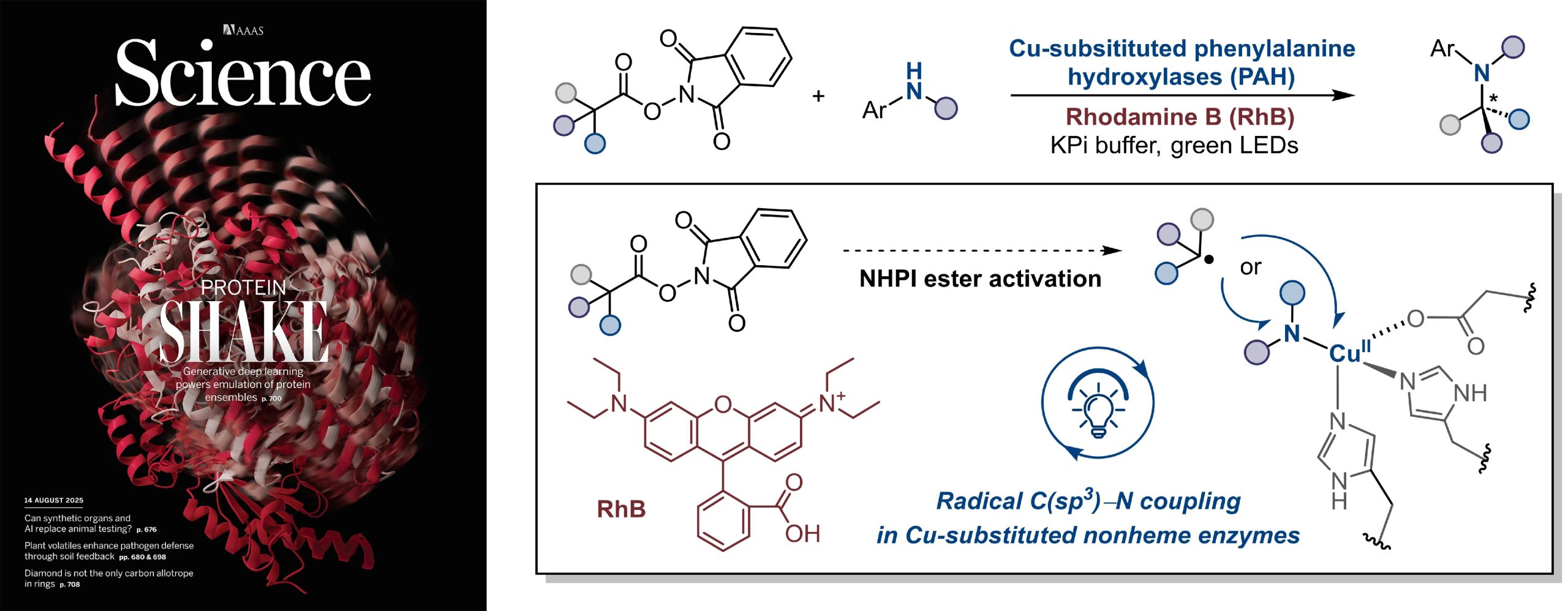
Copper-catalyzed radical C(sp³)–N coupling has emerged as a major focus in synthetic catalysis over the past decade. However, achieving this reactivity within an enzymatic system has remained elusive. In this study, the Huang Lab introduces a photobiocatalytic strategy for radical benzylic C(sp³)–N coupling using a copper-substituted nonheme enzyme. Using rhodamine B as a photoredox catalyst, the team identified a copper-substituted phenylalanine hydroxylase that enables enantioconvergent decarboxylative amination between N-hydroxyphthalimide esters and anilines. Directed evolution was then applied to remodel the active site, yielding variants with high enantioselectivity across a broad range of substrates. This work expands the scope of non-natural biocatalytic transition-metal catalysis to include copper-catalyzed radical coupling. Dr. Xuzhong Shen is the lead author, and additional contributors from the Huang Lab include Dr. Yihang Xiao, James Zhang, Dr. Xinyuan Ji, and Dr. Jinyan Rui.